

Hey there! As a supplier of Glass Sandblasting Media, I often get asked a bunch of questions. One question that pops up quite a bit is, "What is the maximum temperature that glass sandblasting media can withstand?" Let's dig into this topic and find out.
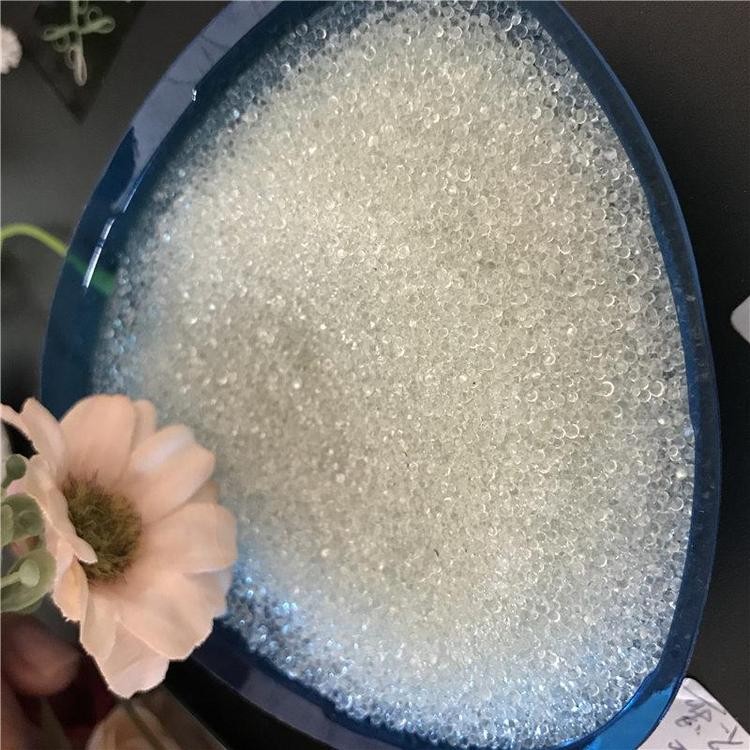
First off, it's important to understand what glass sandblasting media is. It's basically small glass particles used in sandblasting processes. These media come in different types, like White Hollow Glass Microspheres, Architectural Polishing Powder Sandblasting Glassbeads, and Glass Bead Blasting Media. Each type has its own unique properties, and that includes how well they handle heat.
The maximum temperature that glass sandblasting media can take depends on a few factors. The main one is the composition of the glass. Different glasses are made up of different materials, and these materials react differently to heat. For example, some glasses have a higher proportion of silica, which can handle higher temperatures compared to glasses with more impurities.
Generally speaking, most standard glass sandblasting media can withstand temperatures up to around 500 - 600 degrees Celsius. At these temperatures, the glass maintains its structural integrity and can still perform its job effectively in sandblasting. However, if the temperature goes much higher than this, things start to get a bit dicey.
When the temperature exceeds the limit, the glass can start to soften. Softened glass loses its hardness and shape, which means it won't work well for sandblasting. It might clump together, making it difficult to flow through the sandblasting equipment. And if the temperature gets really high, say above 800 degrees Celsius, the glass can even start to melt. Once it melts, it's pretty much useless as sandblasting media.
Another factor that affects the heat resistance of glass sandblasting media is the size of the particles. Smaller particles tend to heat up more quickly than larger ones. So, if you're using fine - grained glass media, you need to be extra careful about the temperature. They can reach their maximum temperature limit faster, even if the overall environment isn't extremely hot.
Now, let's talk about why knowing the maximum temperature is so important. In many industrial applications, sandblasting is done in environments where there's some heat involved. For example, in metalworking, the metal being sandblasted might still be warm from previous processes. If you use glass sandblasting media that can't handle the temperature, it can lead to all sorts of problems. The media might break down prematurely, which means you'll have to replace it more often. This can increase your costs and slow down your production.
Also, in some high - temperature industries like foundries or glass manufacturing, there might be a need to do some sandblasting near hot equipment. You need to make sure that the glass media you're using can handle the heat without causing any issues.
As a supplier, I always recommend that my customers do a test run if they're planning to use the glass sandblasting media in a high - temperature environment. You can take a small sample of the media and expose it to the expected temperature for a short period. See how it behaves. If it starts to show signs of softening or melting, then you know you need to look for a different type of media that can handle the heat better.
We offer a range of glass sandblasting media with different heat - resistant properties. If you're in an industry where high temperatures are the norm, we can help you choose the right media for your needs. Whether it's the White Hollow Glass Microspheres for a more delicate job or the Glass Bead Blasting Media for a more heavy - duty application, we've got you covered.
If you're interested in learning more about our glass sandblasting media or have any questions about their heat - resistant capabilities, don't hesitate to reach out. We're here to help you find the best solution for your sandblasting needs. Whether you're a small - scale workshop or a large industrial plant, we can work with you to ensure that you get the most out of our products.

In conclusion, the maximum temperature that glass sandblasting media can withstand varies depending on the composition, particle size, and other factors. Most standard media can handle up to 500 - 600 degrees Celsius, but it's crucial to test the media in your specific environment. If you're unsure about which media to choose, just give us a shout. We'll be happy to assist you in making the right decision.
References:
- Industrial Sandblasting Handbook
- Glass Manufacturing and Properties Research Papers