

As a supplier of Basalt Fiber Twill Fabric, I often encounter inquiries from customers about the differences between plain weave and twill weave Basalt Fiber Fabric. In this blog post, I'll delve into the characteristics, advantages, and applications of both types of weaves to help you make an informed decision for your specific needs.
Structure and Appearance
The most obvious difference between plain weave and twill weave lies in their structure and appearance. Plain weave is the simplest and most basic type of weave. In a plain weave, the warp (lengthwise) and weft (crosswise) yarns alternate over and under each other in a simple 1:1 pattern. This creates a very regular, checker - board like appearance. The fabric has a flat and smooth surface, with a tight and uniform texture.
On the other hand, twill weave has a more complex structure. The weft yarn passes over one or more warp yarns and then under two or more warp yarns in a repeated pattern, creating a distinct diagonal line or "twill" on the surface of the fabric. The twill pattern can vary in angle and density, but the diagonal lines are a defining characteristic. This gives twill weave Basalt Fiber Fabric a more textured and visually interesting look compared to plain weave.
Strength and Durability
Strength and durability are crucial factors when considering Basalt Fiber Fabric for various applications. Plain weave Basalt Fiber Fabric has excellent strength in both the warp and weft directions because of its balanced and tight structure. The alternating over - and - under pattern of the yarns distributes stress evenly across the fabric, making it resistant to tearing and abrasion. However, due to the tightness of the weave, plain weave fabric may be less flexible compared to twill weave.
Twill weave Basalt Fiber Fabric also offers high strength, but its strength characteristics are slightly different. The diagonal pattern of the twill allows the fabric to be more flexible and drape better than plain weave. This flexibility can be an advantage in applications where the fabric needs to conform to curved surfaces. In terms of durability, twill weave is often more resistant to snagging and fraying because the diagonal pattern helps to prevent individual yarns from pulling out easily.
Manufacturing Process
The manufacturing process for plain weave and twill weave Basalt Fiber Fabric also differs. Plain weave is relatively simple to produce, which can result in lower production costs in some cases. The straightforward 1:1 over - and - under pattern can be easily replicated on most weaving looms, making it a cost - effective option for large - scale production.
Twill weave, however, requires a more complex weaving process. The creation of the diagonal pattern involves more precise control of the loom and the movement of the yarns. This complexity can lead to higher production costs, but it also allows for greater customization in terms of the twill angle and density, which can be tailored to specific application requirements.
Applications
The differences in structure, strength, and flexibility between plain weave and twill weave Basalt Fiber Fabric make them suitable for different applications.
Plain weave Basalt Fiber Fabric is commonly used in applications where high strength and a flat surface are required. For example, it is often used in the production of Basalt Fiber High - temperature Filter Bag. The tight and uniform structure of the plain weave helps to trap fine particles effectively, while the high - temperature resistance of basalt fiber ensures the bag can withstand harsh industrial environments. It is also used in some construction applications, such as reinforcement in concrete structures, where the even distribution of strength in both directions is beneficial.
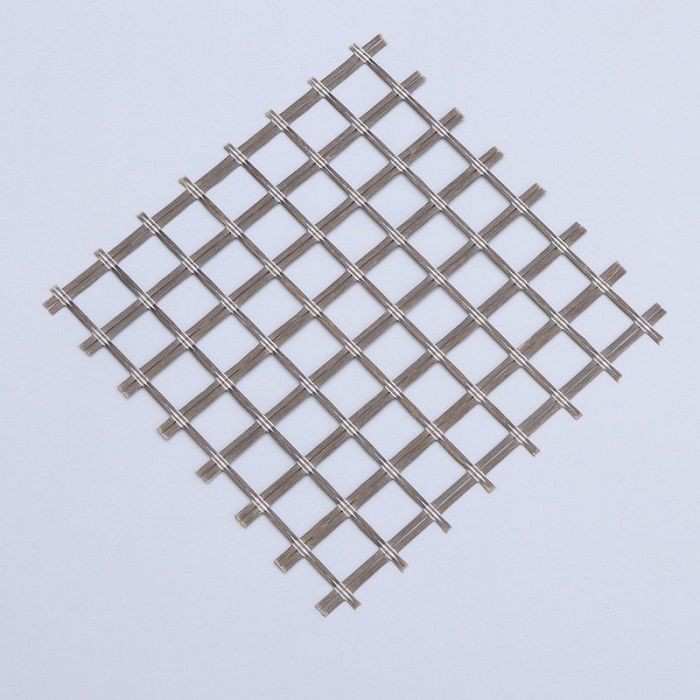
Twill weave Basalt Fiber Fabric, with its flexibility and drapability, is well - suited for applications where the fabric needs to conform to complex shapes. It is often used in the automotive and aerospace industries for parts that require a combination of strength and flexibility. For example, it can be used as a reinforcement material in composite components. Additionally, twill weave Basalt Fiber Fabric is a popular choice for Basalt Geogrid applications. The diagonal pattern of the twill helps the geogrid to distribute load more effectively and provides better soil - reinforcement performance. Another application is Basalt Fiber Needle Punched Felt, where the flexibility of twill weave can contribute to the overall performance of the felt.

Cost Considerations
Cost is an important aspect for any purchasing decision. As mentioned earlier, plain weave Basalt Fiber Fabric is generally less expensive to produce due to its simple manufacturing process. This makes it a more cost - effective option for applications where high - volume production is required and where the specific properties of twill weave are not necessary.
Twill weave Basalt Fiber Fabric, with its more complex manufacturing process and potentially higher customization requirements, tends to be more expensive. However, the added benefits of flexibility, drapability, and unique visual appearance may justify the higher cost in certain applications.
Conclusion
In conclusion, both plain weave and twill weave Basalt Fiber Fabric have their own unique characteristics, advantages, and applications. Plain weave offers balanced strength, tight structure, and cost - effectiveness, making it suitable for applications where strength and a flat surface are key. Twill weave, on the other hand, provides flexibility, better drapability, and a more textured appearance, which are beneficial in applications that require the fabric to conform to complex shapes or where a more visually appealing product is desired.
If you are in the market for Basalt Fiber Fabric and are unsure which weave is right for your application, I encourage you to reach out for a consultation. We can discuss your specific requirements in detail and help you select the most suitable product. Whether you need a high - strength plain weave fabric for industrial filtration or a flexible twill weave fabric for aerospace components, we have the expertise and products to meet your needs. Contact us today to start the procurement process and find the perfect Basalt Fiber Fabric solution for your project.
References
- "Handbook of Basalt Fibre Reinforced Composites", Edited by V. M. Karbhari, Woodhead Publishing, 2017.
- "Textile Science", Third Edition, by Robert H. Textor, Prentice Hall, 2003.
- Industry reports on Basalt Fiber Fabric applications and manufacturing processes.