

Basalt is a common extrusive igneous rock formed from the rapid cooling of basaltic lava exposed at or very near the surface of Earth. Basalt scales, a unique product derived from basalt, have gained significant attention in various industries due to their remarkable properties. As a trusted basalt scales supplier, I am excited to delve into the fascinating process of how basalt scales are formed.
The Composition and Origin of Basalt
To understand how basalt scales are formed, we must first look at the composition and origin of basalt itself. Basalt is primarily composed of plagioclase feldspar and pyroxene, with smaller amounts of olivine, amphibole, and other minerals. It is typically dark - colored, ranging from black to dark gray, because of its high content of iron - magnesium minerals.
Basalt forms from the cooling and solidification of basaltic magma. Basaltic magma is generated in the Earth's mantle, usually at mid - ocean ridges or hot spots. At mid - ocean ridges, tectonic plates are moving apart, allowing magma to rise from the mantle to the surface. This magma is rich in iron and magnesium and has a relatively low viscosity, which means it can flow easily. When it reaches the surface, it cools rapidly due to the low temperature of the surrounding environment (either air or water in the case of underwater eruptions).
The Initial Stages of Basalt Formation
The journey of basalt scales begins with the volcanic eruption of basaltic magma. When basaltic magma is erupted onto the Earth's surface, it spreads out in large lava flows. The rapid cooling of the lava on the surface forms a solid crust. This crust acts as an insulator, slowing down the cooling rate of the underlying lava. Different cooling rates can lead to the formation of various textures in the basalt. For example, if the lava cools extremely rapidly, glassy rocks can form. However, in most cases, the cooling is fast enough to form small crystals, resulting in a fine - grained texture.
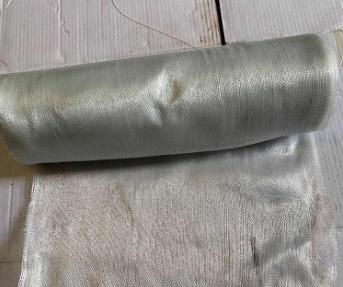

Breaking Down Basalt into Scales
Once the basalt rock has formed, the process of turning it into basalt scales begins. The first step is the extraction of basalt from quarries. We carefully select high - quality basalt deposits to ensure the best raw material for our products. After extraction, the basalt is transported to our processing facilities.
In the processing plant, the basalt rocks are first crushed into smaller pieces using crushers. This step reduces the size of the basalt to a more manageable level for further processing. The crushed basalt is then fed into a grinding mill. In the mill, the basalt is ground into fine particles through a series of mechanical processes. The grinding process is crucial as it determines the size and quality of the basalt scales. We use advanced grinding technology to ensure that the basalt scales have a uniform size and shape.
Refining and Quality Control
After the grinding process, the basalt scales undergo a refining process. This involves separating the scales based on their size and quality. We use screening machines to filter out any oversized or undersized particles. This ensures that the final product meets the strict quality standards required by our customers.
Quality control is an integral part of our production process. We have a dedicated team of quality control experts who conduct regular tests on the basalt scales. These tests include analyzing the chemical composition, particle size distribution, and physical properties of the scales. Only after passing these rigorous tests are the basalt scales packaged and prepared for shipment.
Applications of Basalt Scales and Our Product Offerings
Basalt scales have a wide range of applications in different industries. In the construction industry, they can be used as an additive in concrete to improve its strength and durability. In the insulation industry, basalt scales are used to produce high - performance insulation materials.
As a leading basalt scales supplier, we also offer a variety of other basalt - based products. Our Basalt Fiber Needle Punched Felt is a versatile product that can be used for insulation, filtration, and sound absorption. The felt is made by needling basalt fibers together, creating a dense and durable material.
Our Basalt Fiber Biobag is an eco - friendly alternative to traditional plastic bags. It is made from basalt fibers and can decompose naturally over time, reducing environmental pollution.
Another notable product is our Basalt Fiber High - temperature Filter Bag. This filter bag is designed to withstand high temperatures and can be used in industrial processes such as gas filtration in power plants and steel mills.
Why Choose Our Basalt Scales?
We take pride in being a reliable basalt scales supplier. Our products are known for their high quality, consistency, and performance. We use state - of - the - art production technology and strict quality control measures to ensure that every batch of basalt scales meets the highest standards.
We also offer customized solutions to meet the specific needs of our customers. Whether you need a particular size or grade of basalt scales, our team of experts can work with you to develop a solution that fits your requirements.
Contact Us for Procurement
If you are interested in purchasing basalt scales or any of our other basalt - based products, we encourage you to contact us for a procurement discussion. Our sales team is ready to provide you with detailed product information, pricing, and delivery options. We believe in building long - term partnerships with our customers, and we are committed to providing excellent customer service.
References
- Deer, W. A., Howie, R. A., & Zussman, J. (1992). An Introduction to the Rock - Forming Minerals. Longman Scientific & Technical.
- Macdonald, G. A. (1972). Volcanoes: Principles of Volcanism. W. H. Freeman and Company.
- Skinner, B. J., & Porter, S. C. (2000). The Dynamic Earth: An Introduction to Physical Geology. John Wiley & Sons.